
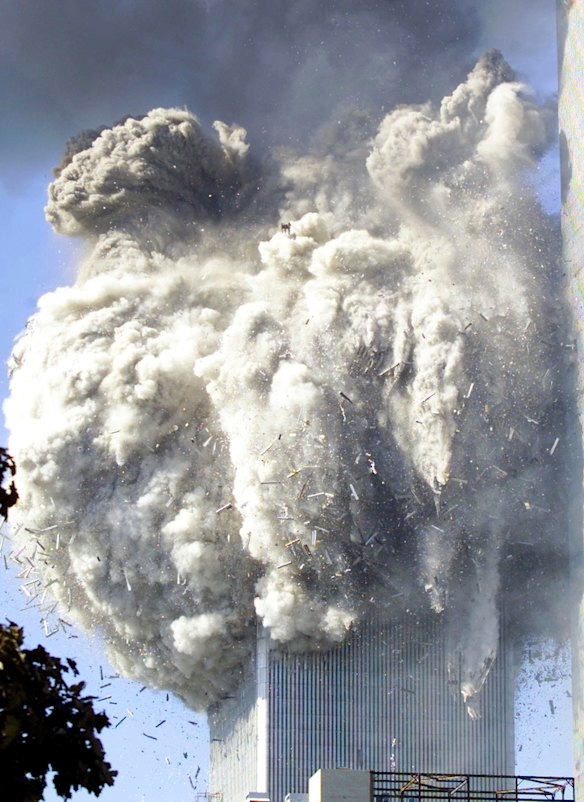
In October 2001, Alan Gerson, an old friend from Stuyvesant High School, called to tell me he had won the City Council runoff election to represent Lower Manhattan and would chair a new Select Committee on Lower Manhattan Redevelopment. He needed a policy director with business and communications experience but had an allocation of just $18,000—less than one-tenth of my salary running Gist.com, a SoHo-based internet company I had founded in 1996. Still, like thousands of New Yorkers who had never seen our hometown so demoralized, I wanted to help.
Lesson 1: Good Government Starts With Listening Locally
New York was built on three foundations: trade, tolerance, and a government that listened to its citizens. Founded in 1624, New Amsterdam prospered by embracing inclusive commerce regardless of religion, race, or national origin. When Dutch leaders surrendered to the British in 1664, they did so only after securing an understanding that the city’s Jews, Muslims, Catholics, and free Black residents could remain and participate in commerce.
Trade has always been central to New York, which is why the Twin Towers, opened in 1973, were named the World Trade Center—and why they became a symbolic terrorist target.
One little-known chapter of the federal response to 9/11 was the Bush/Cheney administration’s plan to move the U.S. Customs Service from its historic home in Lower Manhattan, since 1789, to Newark, New Jersey, despite assurances that Washington would rebuild rather than retreat from downtown.
That plan might have succeeded had Sam Zesker not spoken at a public hearing our committee held at City Hall on April 11, 2002, and had we not been listening. Zesker ran Sobel Network Shipping Co., a customs brokerage firm headquartered in a damaged building next to the World Trade Center. Zesker said that he had been contacted by the U.S. Customs Service and told to look for a new lease in New Jersey because the agency and its 750 employees would be permanently relocated to Newark.
Nobody in the city government had heard of the plan. I intercepted Zesker as he left and asked for his business card.
Lesson 2: The Public Good Requires Public Awareness and Pressure
Within days of 9/11, Congress passed a $40 billion emergency appropriations bill to fund rebuilding. It included funding for local businesses and residents that would be controlled by a new entity, the Lower Manhattan Development Corporation (LMDC).
As a top-down organization with a multitude of tasks and no institutional capacity to connect with the community, the LMDC’s well-intentioned programs missed many local needs. My job, which started January 3, 2002, was to listen to what these unmet needs were, then work with government officials through our committee to lobby for improvements.
Our first focus was the eligibility zones for the residential assistance program, whose purpose was to encourage residential lease renewals and to compensate locals for their 9/11 losses. The initial program applied only to the affluent areas immediately around the World Trade Center site in Battery Park City and Tribeca.
But the toxic smoke that caused thousands of downtown residents to flee the area had drifted east on 9/11, impacting the far poorer residents in Chinatown. Our committee successfully lobbied to expand this zone to include tens of thousands of renters residing in rent-stabilized apartments, Mitchell-Lama housing, and public housing. As a result, within a year of 9/11, expanded zone tenants received $100 million in additional funding, and two-thirds of all approved applicants were from low-to-moderate-income households.
Another committee success was the modification of the WTC Business Recovery Grant program, which gave $2,500 per employee to businesses with 10 to 200 workers. In an oversight, businesses with fewer than 10 workers were left out of the program. In addition, the LMDC business subsidy zones were far smaller than the actual impacted business area.
At a March 18 rally on the steps of City Hall, Committee Chair Gerson said, “We believe that the time has come to stand up for the forgotten neighborhoods that suffered from this terrible act.”
Gifford Miller, the Speaker of the Council, added, “There is a group of businesses downtown that need our help if they are going to survive. Unfortunately, they have been excluded by the myriad of assistance programs available and they are the ones that need help the most.”
Within months, the programs were revised, and an extra $200 million flowed to smaller businesses in Lower Manhattan to help them stay afloat. In total, our committee’s lobbying efforts resulted in three major program modifications that brought thousands of New Yorkers and small businesses about $300 million in additional funding.
Reversing the retreat of Customs from Lower Manhattan proved more complicated. Unlike the LMDC, the U.S. Customs Service was a federal agency that had no need or mechanism to listen to local constituents.
We needed a larger megaphone—one that could allow Sam Zesker’s concerns to be heard in Washington, D.C. I reached out to Senator Charles Schumer’s office for help. On June 17, Schumer joined Gerson, Miller, and Representative Jerry Nadler on the steps of City Hall. “The Customs Service decision is bad for New York,” Schumer declared. “And if the situation doesn’t change soon, I promise you, it’s going to be quite bad for the Customs Service, too.”
A few days later, the New York Daily News, then the nation’s sixth-largest newspaper, jumped on board with an editorial titled, “Customs Has a Duty to New York.” The News hammered the agency for months with editorials denouncing its “cowardly retreat.” After uncovering a memo contradicting public statements, the controversy heated up. “Lies Can’t Clear Customs,” the News editorialized on October 8, 2002. This was followed by an article titled “Chuck Rips U.S. Customs on N.J. Move.”
Mayor Michael Bloomberg and Governor George Pataki joined the public pressure effort. In mid-October, our committee organized a press conference of 19 Council members that was joined by Senator Schumer and reported in the News with the headline “Council Confronts Cussed Customs.” The Bush White House felt the heat. On October 18, six months after Zesker blew the whistle, The New York Times reported the agency’s reversal with an article titled “U.S. Customs Will Remain In Manhattan.”
Our committee was far less effective in convincing government agencies to compensate the smallest retail subtenants of the World Trade Center’s sub-concourse.
Unlike larger businesses and the building’s developer, Larry Silverstein, whose insurance policies provided more than $4 billion to rebuild, a few dozen independent small businesses in the transit mall beneath the complex were uninsurable.
Lesson 3: “Fair to All” Policies Can Mean Neglecting the Most Deserving
Our committee heard from a number of these tiny retailers—like a jewelry kiosk and a toy store—who had lost everything in the tower collapse and were unable to reopen elsewhere. They complained that the government’s restitution programs treated the demolished mom-and-pop businesses in the towers the same as the mall’s Gap store, or a midsize law firm two blocks away whose offices went untouched. Each business, regardless of size, was in the same “impact zone” and would be provided with 25 days of its annual revenue as restitution. So the jewelry kiosk owner, who had lost $75,000 in inventory, received less than $10,000, while a nearby law firm that never stopped doing business could receive $1 million.
Since one of the widely publicized purposes of the congressional funding was to cover the losses of businesses impacted by the 9/11 attacks, I hoped that once the City Council brought this oversight to the attention of the LMDC, they would allocate less than 1% of the small business relief funds to make the poorest victims of 9/11 whole.
But the state agencies administering the program refused to budge. They had created a restitution program based on income that would treat every business the same, with no capacity to discern need or equity.
Our committee tried its best. At a City Hall press conference on October 23, 2002, Alan Gerson was joined by Council Speaker Miller, State Assembly Speaker Sheldon Silver, and about 75 owners of businesses that had been in the World Trade Center. “It only makes sense that businesses destroyed totally are treated differently from businesses that remained physically intact,” Gerson said.
In response, a spokesman for the Empire State Development Corporation, which ran the program, told The New York Times that “partisan politics” was “at play” in our request, and that those backing the proposal were all Democrats.
To this day, few Americans are aware that despite billions of dollars of taxpayer money spent on 9/11 restitution, a couple of million dollars could not be found for the neediest business victims of the World Trade Center attack.
Lesson 4: Government Should Apply the Precautionary Principle When Responding to Disasters
Disaster relief should not be about politics, but in the months following 9/11, it was. The rush to declare the air and building interiors in Lower Manhattan safe so that the Financial District could fully reopen trumped the need to take health precautions in clearing debris, properly test the air, and provide professional cleaning services and air filters to the tenants surrounding the World Trade Center.
This was not a case of 20/20 hindsight. From Alan Gerson’s first day in office, he joined New York Congressman Jerry Nadler in demanding independent testing, transparency, and additional resources for indoor cleaning.
A few months earlier, on September 18, Environmental Protection Agency Administrator Christine Todd Whitman had issued a press release stating that air around the World Trade Center was “safe to breathe.” The EPA, as well as the city health agencies controlled first by Mayor Rudy Giuliani and then Michael Bloomberg, were more committed to reassuring the public than providing transparency or exercising caution. “I come down here in the morning and sometimes the odor is terrible,” Giuliani told the Daily News on October 6, 2001. “But what I’m told is that it is not dangerous to your health.”
Bloomberg took office in January, and the next month stated: “Every test that has been done says the air quality was in acceptable limits. I think some people are just never going to want to believe that.”
City Hall and the EPA were focused on persuading, not listening. The Board of Education assured parents at Stuyvesant High School, just three blocks from Ground Zero, that after a million-dollar cleanup and the installation of HEPA filters, it was safe to reopen. On October 9, 2001, students returned to the building. Within weeks, they began suffering from coughs, nosebleeds, respiratory problems, and headaches. They later learned that the filters had never been installed and that the school’s air vents were lined with toxic 9/11 dust.
“We live in a world of probability,” former Council member Alan Gerson recently reflected. “We should institutionalize the precautionary principle, rather than use uncertainty as an excuse to continue business as usual.”
The National Institute of Health’s definition of the precautionary principle is, “When an activity raises threats of harm to human health or the environment, precautionary measures should be taken even if some cause-and-effect relationships are not fully established scientifically.”
Had this approach been followed after 9/11, downtown air quality would have been considered questionable, and a few hundred million dollars could have been spent on protective respirators and suits for debris-clearing crews at the World Trade Center, as well as on air filtration systems and professional cleaning crews for indoor spaces within a two-mile radius.
Instead, the cost of a federal victim compensation fund for the health claims of 77,000 Americans stemming from 9/11 air has already exceeded $18.5 billion, with 750 new claimants every month. That is 100 times what it would have cost taxpayers had government agencies responded responsibly instead of politically, applying the precautionary principle to air quality in the aftermath of 9/11.
In addition, more people have died from illnesses linked to the air quality following the attacks than from the devastating attacks themselves.